
Commercial Lease Help for Florida Business Tenants
When your business space is at risk, every decision affects more than the lease. It can affect your income, employees, customers, inventory, and next move.
If your landlord sent a notice, changed terms, threatened access to the property, demanded fees, or is refusing to address a serious issue, start by organizing the facts before you respond.
Commercial leases are different from residential leases. Your rights often depend on the written lease, payment history, notices, deadlines, and what the landlord has done.
This page helps Florida business tenants understand what to look at first and when legal guidance can help protect the business from a rushed decision.

Start With What Is Happening
Choose the situation that feels closest to what is happening. You do not need to know the legal category before asking for help.
|
My landlord sent a notice or demand You may have received a notice to pay, cure a default, leave the space, renew, not renew, or respond by a certain date. Save every page and check the deadline before answering. |
My rent balance or extra charges look wrong Commercial leases often include rent, late fees, CAM charges, maintenance costs, taxes, insurance, or other charges. Keep the ledger, invoices, emails, and proof of payment. |
|
My landlord is threatening my access to the space If your landlord is threatening a lockout, limiting entry, removing access, or interfering with operations, document what happened and when it happened. |
Repairs or property conditions are affecting my business Leaks, electrical problems, plumbing issues, safety concerns, or maintenance failures can disrupt business operations. Your lease may explain who is responsible and what notice is required. |
|
The property is being sold or my lease is changing A sale, ownership change, non-renewal, relocation demand, or proposed lease change can affect your next steps. Do not assume you must agree without reviewing the lease and notice. |
I need to leave, renegotiate, or protect my business You may be facing lower revenue, relocation, business changes, landlord pressure, or a lease that no longer works. Before you move out, stop paying, or sign new terms, understand the risk first. |
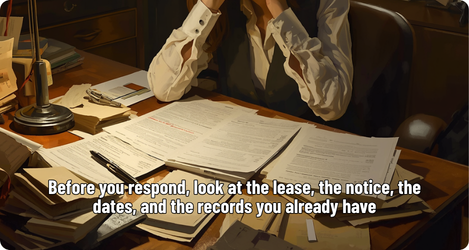
Before You Respond, Gather These First
Commercial lease issues often turn on details. Before you call back, send a message, sign anything, move out, or stop paying, gather what you already have.
- Your lease and all amendments
- Any notice, letter, email, or text from the landlord
- Rent ledger, invoices, CAM statements, late fee notices, and payment records
- Photos or videos of property conditions or access issues
- Repair requests and maintenance records
- Messages about renewal, non-renewal, sale, relocation, default, or payment demands
- Dates when you received each document or message
- Any business impact notes, such as lost access, forced closure, damaged inventory, or interrupted operations
Why You Should Not Guess
A rushed response can create problems for your business. A missed deadline, informal promise, incomplete payment, or emotional message can change the leverage in the dispute.
Do not rely only on what the landlord says the lease means. Commercial leases are often detailed, and the answer may depend on the exact language of the document.
The safer first step is to understand the lease, the notice, the timeline, and the business risk before deciding what to do next.
How the Law Offices of Debi Rumph Can Help
The Law Offices of Debi Rumph helps tenants understand what is happening before they make a decision that affects their business.
The firm can review the lease, notices, payment records, landlord messages, and the facts around your situation. The goal is to help you see what options may still be available and what risks should be considered before you respond.
If your business space is under pressure, you should not have to sort through the lease alone while trying to keep your business running.
Common Questions from Commercial Tenants
Can my commercial landlord lock me out?
Do not assume the landlord can cut off access without consequences. The answer may depend on the lease, the facts, the type of default claimed, and how the landlord acted. Document the date, time, messages, and any business interruption.
What if the rent balance or extra charges look wrong?
Save the rent ledger, invoices, CAM statements, notices, and payment confirmations. Commercial lease charges can be complex, and the details matter before you dispute or pay the amount claimed.
Can I leave before the commercial lease ends?
That depends on the lease terms, the reason you want to leave, the landlord's actions, and whether there is a negotiated path. Review the lease before moving out or stopping payment.
What if repairs or property conditions are hurting my business?
Document the condition, when you reported it, how the landlord responded, and how it affected operations. The lease may state who is responsible for specific repairs or maintenance.
Should I respond to the landlord right away?
If there is a deadline, do not ignore it. But avoid sending a rushed response before you understand the notice and the lease. Gather the documents first and include the deadline when contacting the firm.
Not Sure What Your Next Step Is?
You do not need to solve the lease dispute before asking for help. Start with what happened, what paper you received, and what deadline appears on the document.
Use the form below to tell us what is happening with your commercial rental space.
If there is a deadline in a notice, letter, email, or court document, include that date in your message.


