
Landlord vs. Tenant Repair Responsibilities in Florida: Who Is Responsible for Repairs?
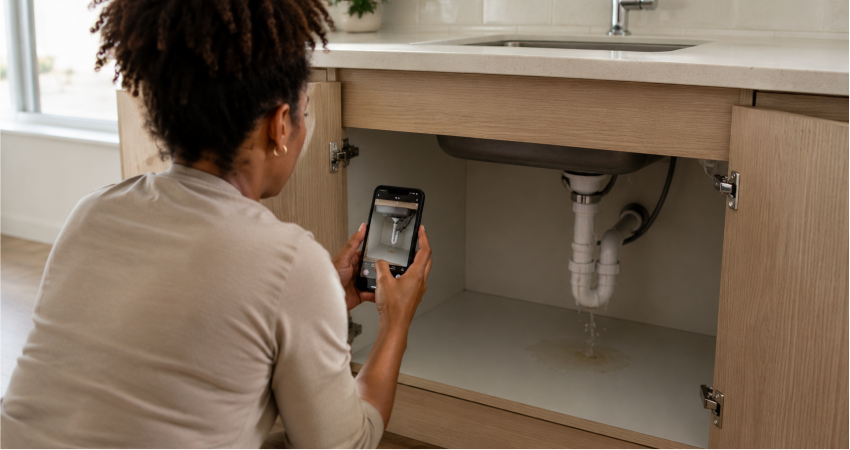
When something breaks in a Florida rental, the first question is usually simple: who has to fix it? The answer depends on the type of repair, the type of rental property, the lease language, who caused the problem, and whether the condition affects habitability.
Florida repair disputes usually begin under Florida Statute § 83.51, which addresses landlord maintenance obligations, and Florida Statute § 83.52, which addresses tenant maintenance obligations. These laws create the starting point, but the lease and the facts still matter.
This guide explains the difference between landlord repair duties and tenant repair duties in Florida, how lease language can shift some responsibilities, how to request repairs in writing, and what tenants should do before escalating a dispute.
Quick Answer
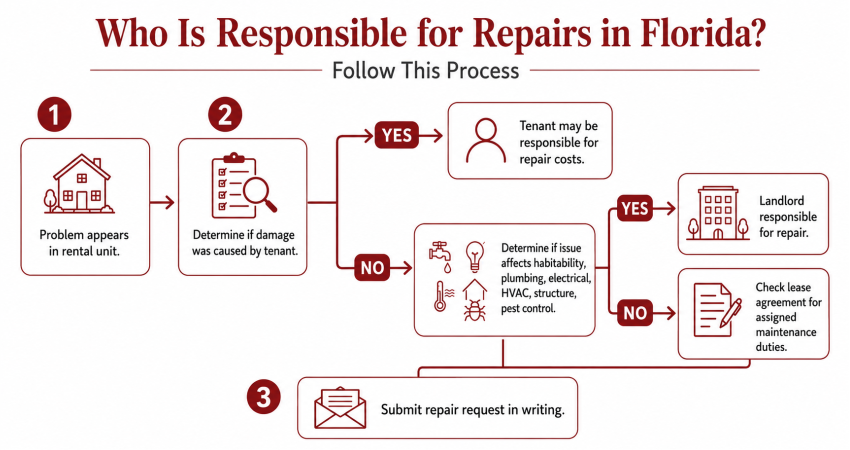
Florida landlords generally must maintain rental property in safe, livable condition and comply with applicable building, housing, and health codes. Tenants must keep the unit clean and sanitary, use systems properly, avoid damage, and report repair issues promptly. Some responsibilities may shift to tenants in single-family homes and duplexes if the lease clearly assigns them.
The hardest repair disputes are rarely about whether something is broken. They are about whether the problem is legally the landlord's duty, whether the tenant caused or worsened the damage, and whether the tenant followed the correct written notice process.
Florida Landlord Repair Responsibilities
Florida Statute § 83.51 requires landlords to maintain rental premises in compliance with applicable building, housing, and health codes. Where no applicable code exists, landlords still have baseline duties related to structural components and essential systems.
Landlord responsibilities often include:
· Structural components, including roofs, windows, doors, floors, steps, porches, exterior walls, foundations, and other structural parts.
· Plumbing systems, including running water, sewage, plumbing fixtures, and hot water where required.
· Electrical systems that must meet applicable safety and code requirements.
· Common areas in multi-family rental properties.
· Pest control in many rental situations, especially in dwelling units other than single-family homes or duplexes unless the lease says otherwise.
· Appliances or systems the landlord agreed to provide and maintain in the lease.
Related guide: What Repairs Are Landlords Required to Make in Florida?
Can a Landlord Shift Repair Duties to a Tenant?
Sometimes. Florida law treats single-family homes and duplexes differently from many apartment or multi-unit rentals. For a single-family home or duplex, certain maintenance duties may be assigned to the tenant if the lease clearly says so and the assignment is legally valid.
Examples of duties that may be assigned to a tenant through a written lease include:
· Lawn care and exterior upkeep.
· Replacing air filters, lightbulbs, or smoke detector batteries.
· Keeping drains clear when the clog results from tenant use.
· Maintaining appliances, systems, or areas specifically assigned to the tenant in the lease.
· Certain pest control duties, depending on the property type and lease terms.
A lease cannot be evaluated by memory or assumption. Tenants should read the repair, maintenance, pest control, appliance, and notice provisions before deciding who is responsible for a repair.
Florida Tenant Repair Responsibilities
Florida Statute § 83.52 requires tenants to maintain the dwelling unit in a clean and sanitary condition and to use the property reasonably. A tenant is not responsible for every repair, but a tenant may become responsible when damage is caused by misuse, neglect, failure to report a problem, or violation of the lease.
Tenant responsibilities generally include:
· Keeping the part of the premises they occupy and use clean and sanitary.
· Removing garbage in a clean and sanitary manner.
· Keeping plumbing fixtures clean, sanitary, and in repair.
· Using electrical, plumbing, sanitary, heating, ventilating, air-conditioning, and other facilities and appliances in a reasonable manner.
· Not destroying, damaging, defacing, or removing any part of the property.
· Not disturbing neighbors' peaceful enjoyment of the premises.
· Reporting damage or needed repairs before the problem becomes worse.
Related guide: Failing to Report Repairs in Florida
Who Pays for Common Rental Repairs in Florida?
The chart below gives a practical starting point. The correct answer still depends on the lease, the cause of the damage, the property type, and the notice history.
|
Repair issue |
Usually landlord responsibility |
Tenant risk factors |
|
Plumbing leaks or broken pipes |
Yes, when caused by system failure, age, code issue, or landlord neglect. |
Tenant may be liable if they caused the clog, ignored a small leak, or failed to report it. |
|
Electrical hazards |
Yes, when the system is unsafe or not code compliant. |
Tenant may be liable if they overloaded circuits, damaged outlets, or misused equipment. |
|
HVAC or air conditioning |
Depends on the lease, local code, and whether the system was provided and maintained by the landlord. |
Tenant may be responsible for filter replacement or damage caused by misuse. |
|
Pests |
Often yes in multi-unit rentals, unless the lease and facts shift responsibility. |
Tenant may be responsible if poor sanitation, garbage, or food storage caused or worsened the issue. |
|
Appliances |
Yes, if the landlord provided the appliance and agreed to maintain it. |
Tenant may be liable for misuse, impact damage, or failure to use the appliance properly. |
|
Cosmetic items |
Not always, unless required by lease, code, or habitability standards. |
Tenant may be responsible for minor upkeep, wear beyond normal use, or damage they caused. |
How to Request Repairs From a Florida Landlord
Do not rely only on phone calls or hallway conversations. A repair dispute usually turns on proof: what was wrong, when the landlord knew, and what happened after notice was sent.
[IMAGE PLACEMENT: Insert immediately under this heading, before the step list]
[IMAGE PROMPT: Horizontal legal process timeline. Step 1: Document the issue with photos. Step 2: Send written repair request. Step 3: Save proof of delivery. Step 4: Follow up in writing. Step 5: Seek legal review before withholding rent, terminating the lease, or paying for repairs yourself. White background, burgundy highlights (#791b2b), modern icons, clean legal editorial design, easy to read on mobile, no logos.]
1. Document the condition immediately. Take photos and videos. Capture dates, affected rooms, visible damage, and any safety impact.
2. Send written notice. Describe the problem clearly and ask for repair. Use email, a tenant portal, certified mail, or another method that creates a dated record.
3. Save proof of delivery. Keep screenshots, email timestamps, portal confirmations, certified mail receipts, and responses from the landlord.
4. Follow up in writing if nothing happens. Reference the first notice and state that the condition remains unresolved.
5. Get legal guidance before withholding rent, terminating the lease, or paying for repairs yourself.
Related guide: How to Notify a Landlord About Repairs in Florida
What If the Landlord Refuses to Make Repairs?
If the repair affects health, safety, code compliance, plumbing, electricity, water, structure, or pest control, a tenant may have legal options after proper written notice. The correct next step depends on the facts and the lease.
Possible next steps may include:
· Sending a formal follow-up notice.
· Contacting local code enforcement when the condition may violate building, housing, or health codes.
· Seeking a rent reduction or other legal remedy when the unit was materially affected.
· Terminating the lease under the proper statutory process when the landlord materially fails to comply.
· Using the repair issue as part of a defense if the landlord later files an eviction case.
Before taking action, read What If a Landlord Refuses to Make Repairs in Florida?
What Tenants Should Not Do Without Legal Guidance
Repair problems are serious, but the wrong response can create eviction risk or financial liability. Avoid these steps unless you understand the legal process and have case-specific guidance:
· Do not stop paying rent without following the required notice process.
· Do not move out and assume the lease is automatically over.
· Do not pay for repairs and deduct the cost from rent without legal advice.
· Do not ignore a 3-Day Notice for nonpayment because you believe the landlord failed to make repairs.
· Do not rely on verbal complaints if you later need to prove the landlord knew about the problem.
For common mistakes, read Florida repair dispute myths
Repair Documentation Checklist
Before requesting legal help or escalating a repair dispute, organize the facts. A strong repair file should include:
· A copy of the lease, including all repair, maintenance, appliance, pest control, and notice provisions.
· Photos and videos of the repair issue.
· The date the problem started or was first noticed.
· Every written repair request sent to the landlord or property manager.
· Proof that the landlord received notice.
· All landlord responses, including silence or closed maintenance tickets.
· Receipts, hotel costs, medical documentation, code enforcement reports, or contractor estimates if relevant.
· A timeline showing each date, action, and response.
Frequently Asked Questions
Who is responsible for repairs in a Florida rental?
Landlords are generally responsible for repairs that affect habitability, safety, code compliance, structure, plumbing, electrical systems, and services they agreed to provide. Tenants are generally responsible for keeping the unit clean and sanitary, using systems properly, preventing avoidable damage, and reporting repair issues promptly.
Can a Florida landlord make the tenant responsible for all repairs?
Not in every situation. Some repair duties may be shifted in writing, especially in single-family homes and duplexes. But Florida law still creates baseline obligations that cannot be ignored. Tenants should review the lease before assuming they must pay for a repair.
How long does a Florida landlord have to make repairs?
Florida law does not set one fixed deadline for every repair. The timeline depends on the severity of the condition, whether it affects health or safety, and whether the tenant sent proper written notice. For serious habitability issues, tenants should get legal guidance before escalating.
Can a tenant withhold rent if repairs are ignored in Florida?
Possibly, but only after following the correct legal process. Withholding rent without proper written notice and legal grounds can lead to a 3-Day Notice for nonpayment and possible eviction. Tenants should speak with a Florida tenant rights attorney before withholding rent.
Is a landlord responsible for air conditioning repairs in Florida?
It depends. Florida statewide landlord-tenant law does not always require air conditioning, but AC may become legally important if the lease requires it, if local housing rules apply, if the system provides ventilation, or if the landlord agreed to provide and maintain it.
Who pays for plumbing repairs in a Florida rental property?
A landlord is usually responsible for plumbing system failures, broken pipes, sewage issues, and problems tied to age, code compliance, or landlord neglect. A tenant may be responsible if the tenant caused the clog, misused the plumbing, ignored a leak, or failed to report the issue before it worsened.
Can a tenant be charged for repairs in Florida?
Yes, if the tenant caused the damage, misused the property, violated the lease, or failed to report a known problem that later became worse. Written notice and documentation help show that the tenant acted responsibly.
What repairs make a Florida rental property uninhabitable?
Conditions involving water intrusion, sewage, unsafe electrical systems, structural problems, serious pest infestations, lack of required utilities, mold tied to landlord neglect, or other health and safety risks may raise habitability concerns. The facts, lease, local code, and notice history matter.
Should a tenant call, text, or email the landlord about repairs?
A phone call alone is not enough. Tenants should report repairs in writing and keep proof. Email, tenant portal messages, certified mail, or written follow-up after a call creates a record that can matter if the dispute escalates.
Can a tenant break a lease if the landlord refuses to make repairs?
Sometimes. A tenant may have the right to terminate a lease when the landlord materially fails to comply with repair or habitability duties after proper written notice. The process must be followed carefully. Moving out too early or without proper notice can create financial risk.
Need Help With a Repair Dispute in Florida?
If your landlord is ignoring repairs, your next step should be based on proof, not guesswork. The Law Offices of Debi Rumph helps Florida tenants understand repair responsibilities, notice requirements, and options before a repair dispute becomes an eviction risk.



Comments
There are no comments for this post. Be the first and Add your Comment below.
Leave a Comment