
How Long Do Florida Landlords Have to Return a Security Deposit?
|
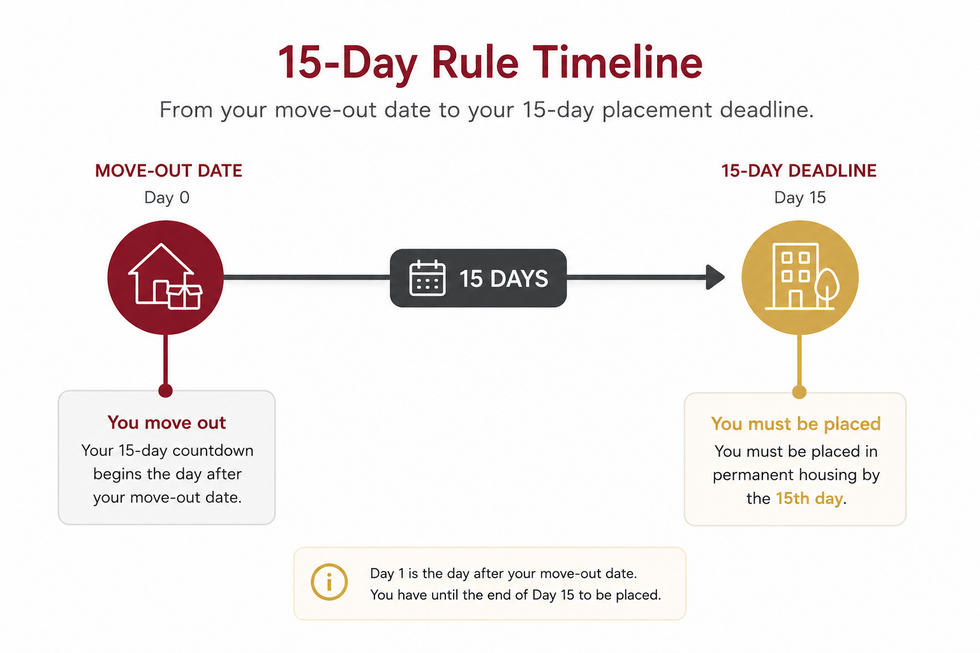
QUICK ANSWER If your landlord isn't claiming any of your deposit, Florida law (Fla. Stat. 83.49) requires it back within 15 days after move-out. If they want to keep part of it, they must mail written notice within 30 days — then return any undisputed amount within 30 days after that notice, if you don't object. |
If your landlord has not returned your security deposit, start with the deadline. Florida security deposit rules are deadline-driven. The date you moved out, the date your landlord sent any claim notice, and the date you received that notice all matter. If your landlord made improper deductions, read our guide on how to dispute security deposit deductions.
You do not need to understand every legal term before taking the first step. You need to know which timeline applies to your situation.
|
Before You Count the Days Write down your move-out date. Find the date on any deposit claim notice. Save the envelope, email, certified mail record, text messages, lease, photos, and move-out proof. Keep a copy of the forwarding address you gave your landlord. |

What Happens If Your Landlord Misses the Deadline?
The deadline depends entirely on what your landlord plans to do with your deposit — and the difference between the two scenarios determines whether you're owed penalties. Florida Statute 83.49(3)(a) sets two separate rules, and missing either one entitles you to triple the deposit amount.
In plain English, if the landlord is not saying you owe money for damage, rent, fees, or another lease issue, the deposit should not sit in limbo.
If more than 15 days have passed and you received no deposit and no explanation, that is a signal to act. Start by organizing your documents before sending anything.
What to check first
- The date your lease ended or you moved out.
- Whether you gave a forwarding address.
- Whether your landlord sent anything by certified mail or email.
- Whether the landlord returned part of the deposit.
- Whether there are messages claiming damage, unpaid rent, or lease violations.
The 30-Day Claim Notice Rule
If your landlord wants to keep part or all of your security deposit, Florida law generally requires a written Notice of Intention to Impose Claim on Security Deposit. This is often called a NOCOSD.
The landlord generally has 30 days after the rental agreement ends to send this notice. The notice should explain that the landlord intends to keep money from the deposit and why.
This notice matters because it starts another deadline. A tenant generally has 15 days after receiving the notice to object in writing. This is one reason tenants should not ignore deposit mail, emails, or certified mail slips after moving out.
What if the landlord misses the 30-day notice deadline?
If the landlord does not provide the required notice on time, the landlord may lose the right to make a claim against the security deposit. That does not always end every dispute, but it can change the tenant's options.
This is where dates matter. A late notice, missing notice, vague notice, or unsupported deduction can affect what happens next.
Why Some Tenants Wait Up to 60 Days
Some tenants expect every deposit to come back in 15 days. That is not always how the Florida timeline works.
If the landlord sends a valid claim notice within 30 days, the landlord may have another 30 days from the date of that notice to return any remaining undisputed amount, unless the tenant objects.
That means a tenant may be waiting close to 60 days after move-out in some situations. The key question is not only how long you have waited. The key question is whether the landlord followed the correct process.
|
Timeline Snapshot No claim from landlord: deposit generally due within 15 days. Claim from landlord: notice generally due within 30 days. Undisputed balance after claim notice: generally due within 30 days after the notice date. Tenant objection window: generally 15 days after receiving the claim notice. |

Common Reasons Landlords Keep Security Deposits
Security deposit disputes often start with one of these claims:
- Damage beyond normal wear and tear.
- Unpaid rent.
- Cleaning charges.
- Broken appliances or fixtures.
- Lease violations.
- Fees the tenant does not recognize.
- Charges that are not clearly itemized.
A landlord saying there was damage is not the same as proving the deduction is valid. Tenants should look for the itemized list, photos, invoices, receipts, move-in proof, move-out proof, and lease language.
Read Deduction guide
What You Should Gather Before You Respond
Before you call, write, or file anything, collect the documents that show the timeline and the condition of the property.
- Lease agreement and any renewal.
- Move-in photos or inspection checklist.
- Move-out photos and videos.
- Deposit receipt or proof of payment.
- Forwarding address proof.
- Certified mail records, envelopes, emails, and texts.
- Landlord's claim notice and itemized deductions.
- Receipts or invoices the landlord provided.
- Rent ledger or payment proof.
This helps the team understand whether your issue is a missed deadline, an invalid deduction, a missing notice, or a broader landlord dispute.
Your Options If the Deposit Was Not Returned
If your landlord missed the deadline, kept money without support, or sent a notice that does not make sense, you may have options.
Depending on the facts, those options may include sending a demand letter, disputing the deductions in writing, filing in small claims court, or working with a tenant-side law firm.
Law Offices of Debi V. Rumph helps Florida tenants understand the timeline, review the documents, and choose a path based on the tenant's situation. Some clients want the fastest pressure. Others want a path with no money paid out of pocket at the start.
Two ways to move forward
|
Option 1: Patient No-$-Out-of-Pocket Option For tenants who want help pursuing the deposit without paying legal fees upfront. This path may take longer, but it can make sense when the goal is to reduce immediate financial pressure. |
|
Option 2: More Aggressive Paid Option For tenants who want a more direct and faster legal strategy. This path may fit tenants who want the team to move quickly and are comfortable paying for that approach. |
Act Before the Paper Trail Gets Cold
Do not wait until messages disappear, photos are lost, or deadlines become harder to prove.
If your landlord still has your deposit, the next step is to identify the exact timeline and gather the proof. The form below helps the team understand what happened and which option fits your situation.
Call (407) 294-9959 or complete the online form below.


