
Beyond Traps: Should a Florida Tenant Give a Landlord Zero Days or Seven Days to Eliminate a Rat Infestation?
Dealing with a rat infestation is not just unpleasant. For Florida tenants, it can quickly become a serious health, safety, and legal issue. The challenge is that Florida law does not always provide a clear timeline for how fast a landlord must act, which often leaves tenants feeling trapped.
Understanding when you can demand immediate action and when a formal seven-day notice is required is critical to protecting your rights and avoiding costly legal mistakes.
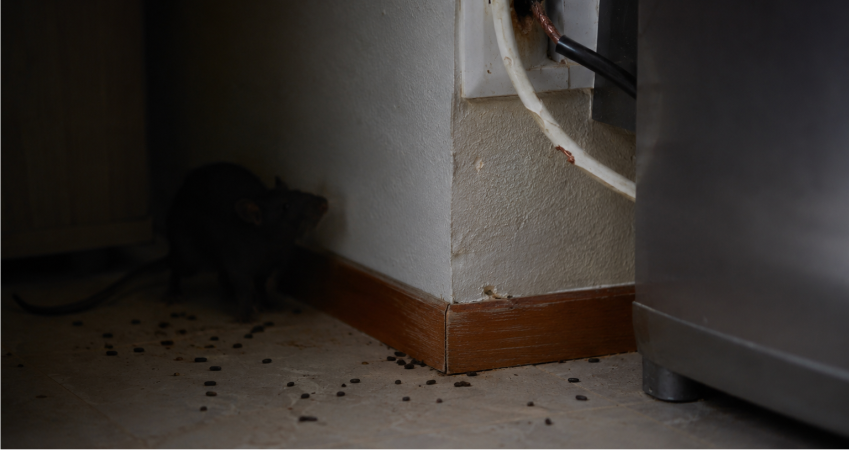
Why a Rat Infestation Is a Serious Habitability Issue in Florida
Before choosing a legal strategy, tenants should understand why rat infestations are treated as more than a minor inconvenience under Florida habitability law. The answer starts with what rats actually do to a rental unit — and to the people living in it.
Health and Safety Risks Caused by Rats
Rats are known carriers of dangerous diseases, including salmonellosis, leptospirosis, and hantavirus. Their droppings and urine can contaminate food, countertops, and indoor air quality. For children, elderly tenants, and individuals with asthma or compromised immune systems, these risks are especially severe.
Beyond health concerns, rats frequently cause property damage by chewing through electrical wiring, insulation, drywall, and personal belongings. Damaged wiring increases the risk of electrical fires — making an infestation a direct safety threat, not a cosmetic issue.
A Florida Landlord's Legal Duty to Address Rat Infestations
Under Florida Statute § 83.51, landlords are required to maintain rental properties in a habitable condition. This duty generally includes extermination of pests such as rats, mice, roaches, and bedbugs — unless responsibility is clearly shifted in the lease.
Who Is Responsible for Pest Control Under Florida Law?
• In multi-unit properties (apartment complexes, condominiums): the landlord is typically responsible for pest control.
• In single-family homes or duplexes: responsibility depends on the lease terms. If the lease explicitly assigns pest control to the tenant, the landlord may not be legally required to act.
While Florida law requires landlords to take reasonable steps to eliminate rats, it does not define an exact deadline. That absence of a statutory timeline is precisely where your notice strategy — and your attorney — become essential.
Choosing Your Legal Strategy: Immediate Move-Out or Seven-Day Notice?
When a landlord fails to address a rat infestation, Florida tenants generally have two legal paths. Each carries different risks and protections. Choosing the wrong one — or skipping a required step — can turn you from victim to defendant.
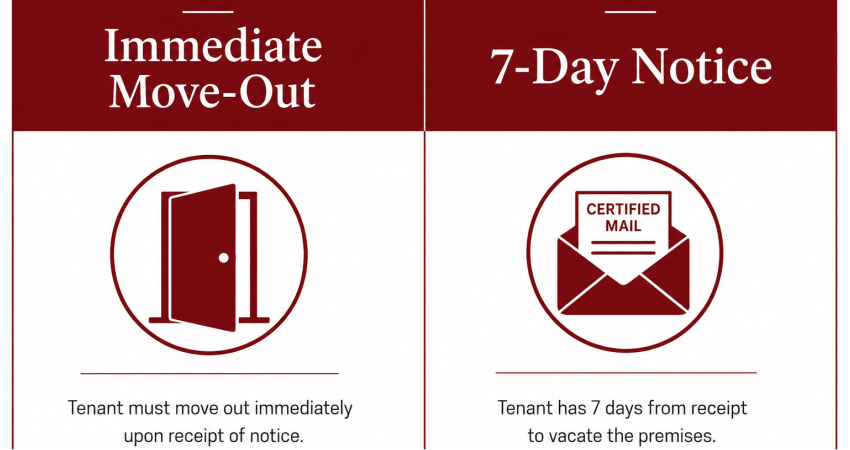
Option 1 — Immediate Move-Out Based on Constructive Eviction
Immediate move-out may be justified when a rat infestation renders the property uninhabitable due to serious health or safety concerns.
Constructive eviction occurs when a landlord's failure to maintain the property forces a tenant to vacate. To rely on this theory, the tenant must leave within a reasonable time after discovering the problem.
⚠️ This approach carries risk. If a court later determines the infestation did not rise to the level of making the unit genuinely unlivable, you could still be held responsible for unpaid rent and early lease termination.
Option 2 — The Seven-Day Notice to Cure Under Florida Statute § 83.56(1)
In many cases, the safer and more strategic option is to serve the landlord with a written seven-day notice demanding that the infestation be corrected. This is authorized under Florida Statute § 83.56(1).
Under this approach, you provide formal written notice giving the landlord seven days to eliminate the infestation. If the landlord fails to comply, you may legally terminate the lease without penalty.
✅ This method demonstrates good faith, creates a paper trail, strengthens your legal position, and significantly reduces the risk of being sued for unpaid rent due to procedural errors.
How to Decide Which Option Fits Your Situation
• Immediate move-out may be appropriate when rats pose an urgent, severe, and documented threat to health or safety — and you have evidence to prove it.
• Seven-day notice is often the preferred option when conditions are serious but not immediately life-threatening. It provides clearer legal protection and stronger documentation.
• When in doubt, consult a Florida landlord-tenant attorney before vacating. Leaving too early without proper notice can eliminate your legal protections entirely.
Practical Steps Florida Tenants Should Take When Facing a Rat Infestation
1. Document the Infestation Thoroughly
Take clear photos and videos of rats, droppings, nests, and property damage. Keep a dated log of sightings, symptoms, and any related medical visits. This evidence is the foundation of every legal strategy available to you.
2. Notify the Landlord in Writing
All communication with the landlord must be documented in writing. Your notice should describe the infestation, request extermination, state a clear deadline, and be sent via a method that creates proof of delivery — ideally certified mail or email with read receipt.
3. Follow the Correct Legal Process
• If moving out immediately: document the unit conditions before leaving. Notify the landlord in writing that the unit was vacated due to uninhabitable conditions. Retain all records.
• If using a seven-day notice: clearly state that failure to correct the infestation will result in lease termination under Fla. Stat. § 83.56(1). Include a specific deadline. Send via certified mail.
4. Consult a Florida Landlord-Tenant Attorney Before Acting
Small procedural errors can lead to eviction or financial liability. Before taking any action — especially deciding between immediate move-out and the statutory seven-day notice — consult an attorney experienced in Florida tenant rights law.
Additional Legal Considerations for Florida Tenants
• Review your lease carefully. Pest control obligations may be expressly allocated to the tenant, particularly in single-family rentals.
• Maintain a complete paper trail. Document every communication, every piece of evidence, and every expense related to the infestation.
• Know your anti-retaliation rights. Florida law protects tenants who assert their legal rights. If a landlord raises your rent, cuts services, or threatens eviction after you file a complaint, that may constitute illegal retaliation under Fla. Stat. § 83.64.
Conclusion: Zero Days or Seven Days Can Change Everything
Florida tenants dealing with rat infestations must choose their legal strategy carefully. In some cases, zero tolerance and immediate departure may be justified. In others, a properly executed seven-day notice provides the strongest protection.
Because landlord-tenant law is fact-specific and procedural errors can be expensive, seeking legal guidance from a Florida tenant rights attorney before acting is often the most effective way to protect your housing, finances, and future rental options.



Comments
Leslie Durant Reply
Posted Feb 25, 2025 at 07:03:56
I have a rat infestation in my home that I’m renting. The landlord is refusing to do anything just send Maintenance out instead of getting a professional. The Maintenance came out and said that he had no idea about rats and what the feces look like he could only plug the holes as of today we’re still living in this house With rats running through our beds. I have feces in my bed dishes I’ve had to pack my things because of the rats my rent is 1298 and I can’t get them to get a professional to come out and get rid of the rats so we’re sleeping in the house with the rats now .
Debi Rumph Reply
Posted Feb 25, 2025 at 09:56:55
Leslie, that sounds absolutely awful! No one should have to live with rats running through their home, let alone their beds! 🐀 It’s completely unacceptable that your landlord is refusing to take proper action and address this serious health hazard.
Based on what you’ve described, it seems like your landlord is well aware of the rat infestation but is choosing to ignore the problem or handle it with inadequate “solutions.” This is a clear violation of your right to habitable housing.
My recommendation: Terminate your lease and move out as soon as possible. Your health and safety are paramount, and you shouldn’t have to endure these conditions any longer.
Here are a few things to keep in mind:
Document everything: Take photos and videos of the rat infestation, including droppings, damage, and any areas where you see them entering or exiting the property. Keep records of all communication with your landlord, including maintenance requests and their responses.
Understand your rights: Florida law provides tenants with certain rights and protections when it comes to uninhabitable living conditions. You may be able to terminate your lease without penalty and even pursue legal action against your landlord for damages.
Consult with an Attorney: Terminating a lease in Florida can be tricky, and it’s important to make sure you do it correctly to avoid any unintended consequences. An attorney who specializes in landlord-tenant law can help you navigate the process, protect your rights, and ensure you receive any compensation you may be entitled to.
The most important thing is to get yourself and your family out of that unsafe environment. Don’t hesitate to reach out to us if you need assistance with terminating your lease or exploring your legal options. We’re here to help!
Carla Reply
Posted Mar 13, 2025 at 13:14:15
This article is well-structured, informative and practical guide for tenants dealing with rat infestations. It does a great job of outlining tenant rights, legal steps, and practical actions to take when a landlord refuses to address the issue. The title is strong and attention-grabbing, especially with the phrase “0 Days or 7 Days”, which immediately sparks curiosity.
Debi Rumph Reply
Posted Mar 13, 2025 at 13:25:14
Thanks, Carla. I am also curious. If it were you, would you give your landlord 0 or 7 days?
Elizabeth Montgomery Reply
Posted May 22, 2025 at 08:57:45
We need help. Our house has been infested with rats due to our landlord never fixing holes in roof that leaked for many years. Now these rats basically throw parties in our kitchen and bedroom. My husband just got approved for SSI and he needs a clean place to live. Are there any resources in Florida to help us get into another place? We have been stuck in this place for 7yrs now, have tried going to the city and the county for help to even try to get our place condemned but everyone just says there’s nothing they can do.
Debi Rumph Reply
Posted May 23, 2025 at 07:03:48
Elizabeth,
This sounds like an absolutely horrifying and unacceptable living situation. Seven years of dealing with rats, especially to the point where they are “throwing parties” in your kitchen and bedroom due to a never-fixed roof, is beyond anything a tenant should endure. And with your husband’s recent SSI approval, a clean and safe environment is not just a preference, but a critical necessity for his health and well-being.
Given everything you’ve described—years of unaddressed issues, a severe rat infestation, and your attempts to get help from the city and county without success—my strongest recommendation is to MOVE OUT ASAP! Your immediate safety and health are paramount.
Now, I understand that simply walking away might seem daunting, especially after being stuck for so long. However, you do have options in how you terminate your lease, and these should be carefully explored with a legal professional. Landlords often have experienced attorneys working hard for them, strategizing to win their cases even when the landlord appears to be “dead wrong” in their actions (or inactions). To protect yourself, you should also strategize your way out.
An attorney can help you:
Understand your rights regarding uninhabitable conditions in Florida.
Determine the best legal path for terminating your lease, minimizing potential financial repercussions.
Navigate any potential legal challenges from your landlord.
While getting to a new, safe home is your absolute top priority, understanding your options for lease termination and having legal counsel by your side can make all the difference in achieving a clean break and protecting your future.
Leave a Comment