
Tenant Rights When Moving Out in Florida: What You Need to Know (2026)
Quick Answer
When moving out in Florida, tenants must provide written notice (7, 15, or 30+ days depending on lease type), supply a forwarding address, and document the property's condition before leaving. Under Florida Statute §83.49, landlords have 15 days to return the full deposit — or 30 days to send a written claim notice. Missing the 30-day deadline means the landlord may forfeit the right to keep any portion of your deposit.
Most tenants focus on getting in. The problems usually start on the way out.
Florida law gives both landlords and tenants specific obligations when a lease ends. If you do not know what those obligations are before you move, you may lose money you are legally owed — or face claims you cannot defend.
This guide covers what Florida law requires when you move out, what your landlord must do, and how to protect yourself every step of the way.
1. Give Your Landlord Proper Written Notice
Before you move out, you need to give your landlord written notice — and the required notice period depends on your lease type under Florida Statute §83.57:
• Month-to-month lease: at least 15 days' notice before the end of the rental period
• Fixed-term lease (e.g., one year): check your lease — most require 30 to 60 days' written notice before the end of the term
• Week-to-week lease: at least 7 days' notice
Giving notice verbally is not enough. Send it in writing — email with read receipt, certified mail, or hand-delivered with a dated copy for your records.
Why this matters
If you leave without proper notice on a month-to-month lease, your landlord may charge you for an additional month of rent — even if you have already moved out and returned the keys.
Always keep a copy of your notice with the date and method of delivery.

2. Provide a Forwarding Address in Writing
This is one of the most overlooked steps — and one of the most important.
Under Florida Statute §83.49, your landlord must send any security deposit notice to your last known address. If you do not provide a forwarding address, your landlord may argue they had no way to reach you — and that argument can delay or block your deposit return.
Provide your forwarding address in writing before or on the day you move out. The easiest way is to include it directly in your written move-out notice letter.
3. Document the Condition of the Property Before You Leave
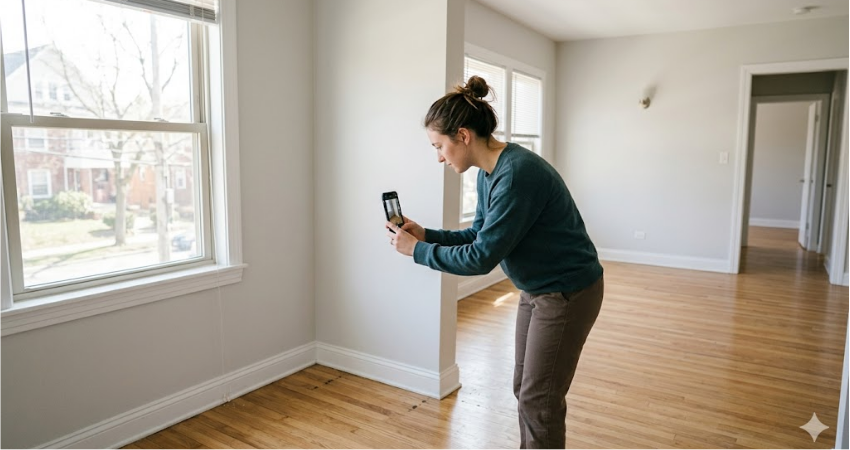
Before you hand over the keys, document everything.
• Take photos and video of every room, appliance, wall, floor, and fixture
• Date-stamp your photos (most phones record this automatically in file metadata)
• Note any pre-existing damage that was present when you moved in
• Compare your current photos to your move-in inspection report if you have one
• Keep copies of all repair requests you submitted during the tenancy
If your landlord later claims you caused damage, your documentation is your defense. A landlord claiming damage is not the same as proving the deduction is valid under Florida law.
Learn more: How to dispute security deposit deductions in Florida
4. Request a Move-Out Inspection
Florida law does not require landlords to conduct a move-out inspection, but you have the right to request one — and doing so protects you.
A move-out inspection conducted in your presence gives you the opportunity to:
• See exactly what the landlord plans to claim as damage
• Dispute claims on the spot with your documentation
• Correct minor issues before they become costly deductions
Request the inspection in writing before your last day. If the landlord refuses or does not respond, document that refusal in writing so you have a record.
5. Understand the Florida Security Deposit Return Timeline
Once you move out and provide your forwarding address, the clock starts under Florida Statute §83.49(3):
• 15 days — if your landlord is returning your full deposit, they must do so within 15 days of the lease ending
• 30 days — if your landlord wants to keep any part of your deposit, they must send a written Notice of Intention to Impose Claim within 30 days
• If your landlord misses the 30-day deadline, they forfeit the right to make any claim — and you may be owed 100% of your deposit back
Missing either deadline can entitle you to the full deposit — and in some cases, up to triple the deposit amount in damages.
Read the full timeline: How long does a Florida landlord have to return a security deposit?

6. What Your Landlord Cannot Legally Deduct From Your Deposit
Not everything that is worn or dirty qualifies as a valid deduction. Florida law distinguishes between normal wear and tear — which is the landlord's responsibility — and actual damage caused by the tenant.
Normal wear and tear (landlord's responsibility — not deductible):
• Faded paint or minor scuffs on walls
• Worn carpet from normal foot traffic
• Loose door handles or hinges from regular use
• Small nail holes from hanging pictures
Damage the tenant may be responsible for:
• Large holes in walls
• Stains or burns on carpet or flooring
• Broken appliances or fixtures caused by misuse
• Pet damage not disclosed or authorized in the lease
If your landlord sends a claim notice that includes normal wear and tear, you have 15 days to object in writing under Florida law.
7. What To Do If Your Landlord Does Not Return Your Security Deposit
If the deadline passes and you have not received your deposit or a valid written claim notice, you have options:
• Send a written demand letter to your landlord
• File a complaint with the Florida Department of Agriculture and Consumer Services
• File a claim in small claims court (for deposit amounts under $8,000)
• Contact a Florida tenant rights attorney to review your options
The Law Offices of Debi Rumph offers a paid Case Strategy Session ($100) to review your specific situation and advise on next steps. Many security deposit cases carry strong legal remedies — including attorney's fees paid by the landlord if you prevail.
Learn more: Security deposit recovery in Florida
8. Moving Out Because of Habitability Issues? Document Everything.
If you are moving out because of unaddressed habitability issues — mold, pest infestations, broken HVAC, or other serious conditions — document everything before you leave.
Florida law requires landlords to maintain rental units in a fit and habitable condition under Florida Statute §83.51. If they failed to do so during your tenancy, that history may be relevant to:
• Defending against damage claims your landlord makes after you leave
• Supporting a lease termination defense
• Recovering costs you incurred because of the landlord's failure to maintain the property
Read more: Repairs and habitability issues in Florida
Frequently Asked Questions: Moving Out in Florida
Do I have to give 30 days' notice to move out in Florida?
It depends on your lease type. Month-to-month tenants must give at least 15 days' written notice before the end of the rental period. Week-to-week tenants need 7 days. If you have a fixed-term lease (such as a one-year lease), check your lease agreement — most require 30 to 60 days' written notice.
What happens if I move out without notice in Florida?
If you leave without providing required written notice on a month-to-month lease, your landlord may charge you for an additional month of rent — even after you have vacated and returned the keys. You may also lose the right to dispute deposit deductions.
How long does a Florida landlord have to return my deposit after I move out?
Under Florida Statute §83.49, your landlord has 15 days to return the full deposit, or 30 days to send a written Notice of Intention to Impose Claim if they plan to keep any part of it. If they miss the 30-day deadline, they may forfeit the right to make any deduction at all.
Can a Florida landlord charge me for normal wear and tear?
No. Florida law does not allow landlords to deduct normal wear and tear from your security deposit. This includes faded paint, worn carpet from regular foot traffic, small nail holes, and minor scuffs. Only actual damage caused by the tenant is deductible.
What should I do if my landlord keeps my deposit unfairly?
Send a written demand letter to your landlord first. If they do not respond or refuse to return the deposit, you can file a claim in small claims court (for amounts under $8,000) or consult a Florida tenant rights attorney. If you prevail, you may be entitled to the full deposit plus attorney's fees paid by the landlord.
Not Sure Where You Stand? Talk to a Florida Tenant Attorney.
Moving out should be straightforward. When it is not — when your landlord is withholding your deposit, making unfair deduction claims, or refusing to cooperate — you need someone who knows Florida tenant law in your corner.
The Law Offices of Debi Rumph has represented Florida tenants for over 20 years. Not sure where you stand? Talk to a licensed Florida attorney for 15 minutes — $100 flat.


Comments
There are no comments for this post. Be the first and Add your Comment below.
Leave a Comment